WhatsApp Utility
vs Marketing
Template Messages
Utility messages follow something your customer did. Marketing messages follow something you want. That one difference decides your approval odds - and roughly 7x of your WhatsApp bill.
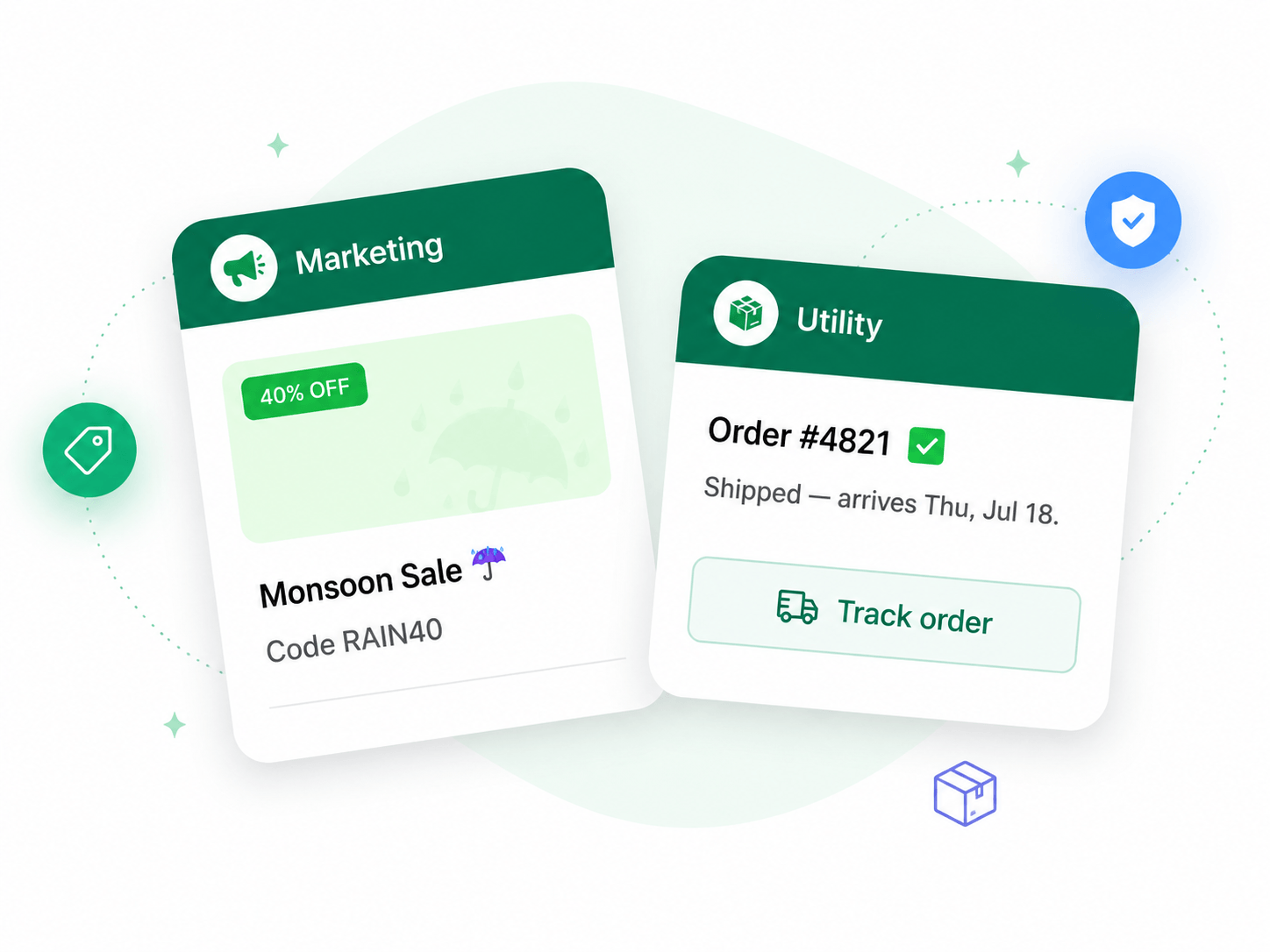
Let's Deep Dive...
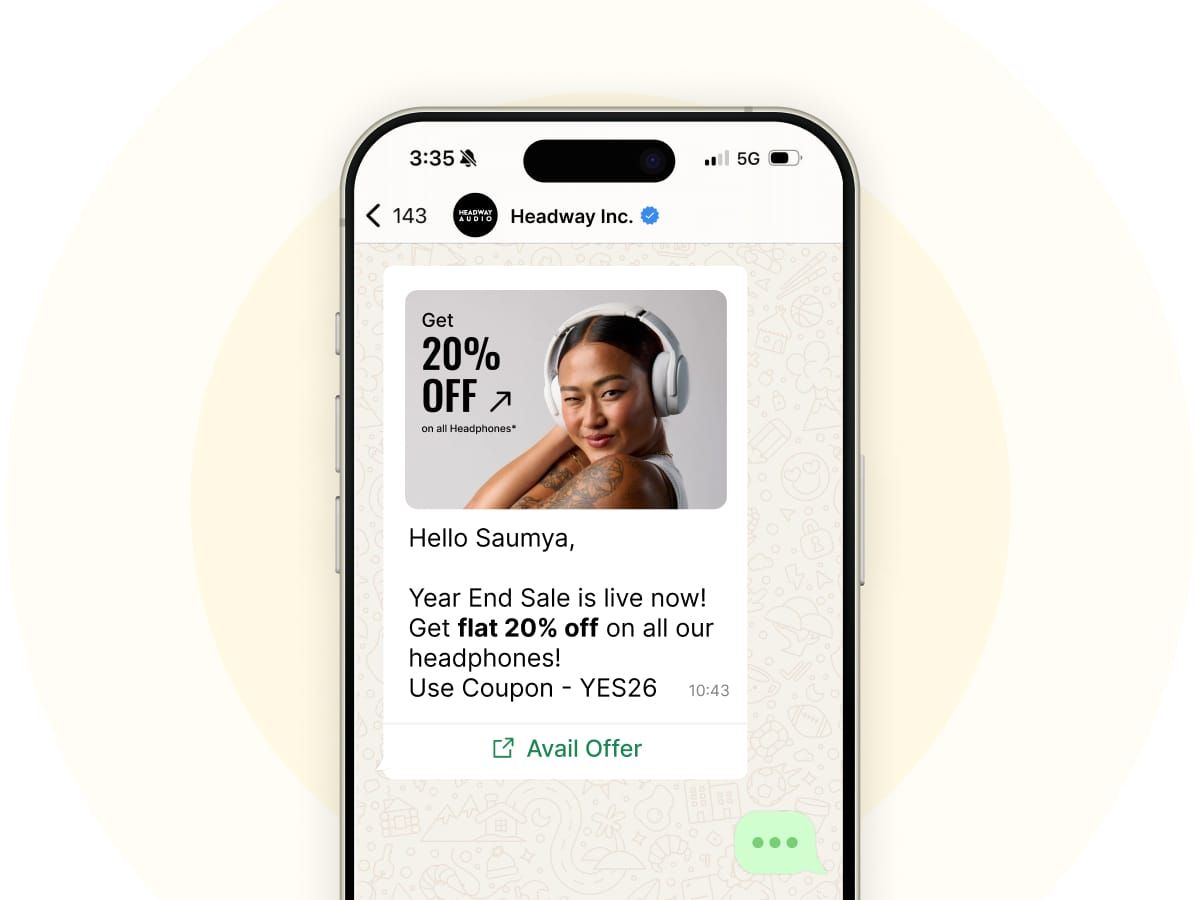
What is a Marketing WhatsApp Message?
A Marketing WhatsApp message is a promotional template used to drive awareness, engagement, and sales - such as offers, product launches, or cart reminders. It's the most expensive WhatsApp message category and has no free tier.
Use it for:
· Discount codes & offers
· New product launches
· Newsletters
· Abandoned cart reminders
· Re-engagement campaigns
Key rule: Requires an approved template and customer opt-in. Volume discounts don't apply to marketing.
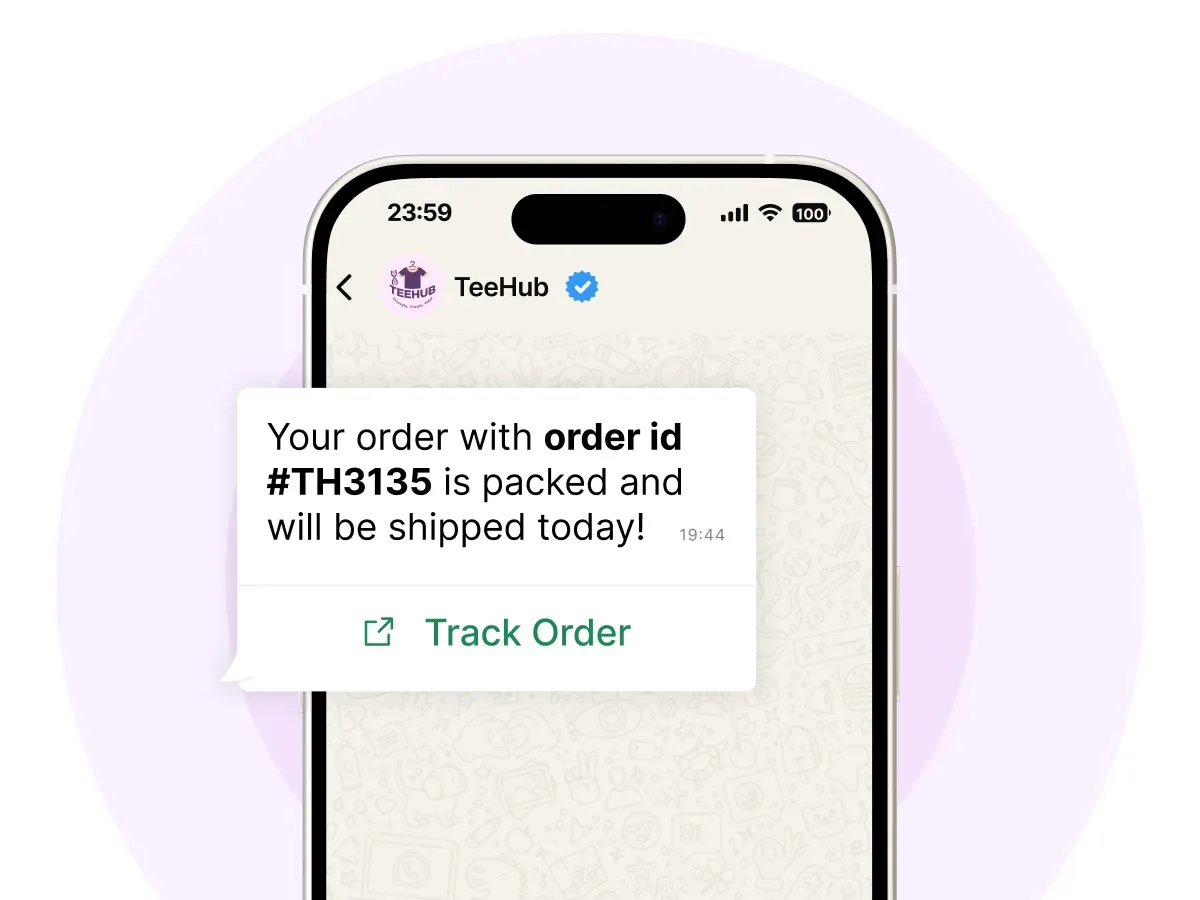
What is a Utility WhatsApp Message?
A Utility WhatsApp message is a transactional template triggered by a specific customer action, such as an order confirmation or shipping update. It's informational, not promotional, and costs far less than marketing.
Use it for:
· Order confirmations
· Shipping & delivery updates
· Payment reminders
· Appointment confirmations
Key rule: Must relate to an existing transaction. Utility templates are charged inside and outside the 24-hour customer service window. High volumes can unlock bulk discounts.
Utility vs Marketing: The Full Breakdown
The complete difference between WhatsApp Utility and Marketing template messages
compared side by side
on the WhatsApp Business API.
Since 1 July 2025, WhatsApp bills per delivered message. Marketing is the most expensive category on the WhatsApp Business API - Utility costs about 7.5x less.
Ready-to-use WhatsApp Utility template messages for orders, shipping and payments. Copy any one and submit it for approval on the WhatsApp Business API.
Ready-to-use WhatsApp Marketing template messages for offers, launches and re-engagement. Every one needs explicit marketing opt-in before you send it.
Get Your Template Categories Right the First Time?
Send the right message every time - and only pay for what you should. AiSensy helps you set up Marketing and Utilty messages the right way on the Official WhatsApp Business API.
Founders & Marketers Love us
Trusted by 210,000+ Businesses across 68+ Countries for WhatsApp Marketing




















FAQs
What is the difference between WhatsApp Utility and Marketing messages?
Utility messages are transactional and triggered by something the customer already did, such as an order, payment, booking or account change. Marketing messages are business-initiated and promotional: offers, launches, cart recovery, re-engagement. In India, Utility costs ₹0.145 per message and Marketing costs ₹1.09.
Is Utility cheaper than Marketing on WhatsApp?
Yes, substantially. In India, Utility costs ₹0.145 per message against ₹1.09 for Marketing, roughly 7.5 times cheaper. On 1,00,000 messages that works out to ₹14,500 versus ₹1,09,000.
Are Utility messages free inside the 24-hour window?
Not anymore. Since 1 October 2026, a Utility template sent inside an open 24-hour customer service window is charged at the normal Utility rate (₹0.145 in India). What is still free: the first 1,000 delivered service messages per business number each month, incoming customer messages, and messages covered by the eligible 72-hour free entry point window from Click-to-WhatsApp ads. From 1 October 2026, the first 1,000 delivered service messages per business number each month are free. Additional service messages are charged at the applicable recipient-country rate.
Who decides which category my message falls into?
You select the category when you create the template. Meta reviews it during approval and can assign a different category if the content doesn't match, for example moving a Utility template with an offer into Marketing.
Can I send promotional content in a Utility message?
No. Utility messages must be transactional and related to a customer action. Promotional content belongs in Marketing templates and may lead to reclassification or rejection.
How are WhatsApp Business API charges calculated?
WhatsApp Business API charges depend on the message category and the recipient’s country.
Marketing, Utility and Authentication templates are charged per delivered message. Service Messages follow a monthly allowance: each WhatsApp Business number gets 1,000 free delivered service messages every month, after which additional service messages are charged at the applicable recipient-country rate. See the country-wise rates.
Why do Utility templates get rejected so often?
Almost always promotional language: an offer, a coupon, a "buy now" CTA, or copy that simply reads like a pitch. Other frequent causes are incorrect variable formatting, URL shorteners, excessive capitalisation and poor grammar. AiSensy's AI template generator helps you draft templates that pass on the first attempt.
Why are Marketing messages more expensive?
Marketing messages are promotional and business-initiated, making them the highest-priced category under WhatsApp's pricing structure.
Can a template category be changed after approval?
No. If you want to change a template's category or content, you must create and submit a new template for Meta's approval.
Why does Meta reject WhatsApp templates?
Common reasons include:
Wrong template category selection
Promotional content inside Utility templates
Spammy wording or excessive capitalization
Incorrect variable formatting
URL shorteners
Poor grammar or formatting
Policy violations
Can WhatsApp templates include buttons and media?
Yes. WhatsApp templates can include:
Images
Videos
Documents
Call-to-Action (CTA) buttons
Quick Reply buttons
A text component is typically required alongside media.
How long does WhatsApp template approval take?
Most templates are approved within a few minutes. In some cases, manual reviews can take several hours or up to 24 hours.
Are WhatsApp message rates the same in every country?
No. WhatsApp Business API pricing varies by country. Meta sets different rates based on the recipient's location and message category.
What is the difference between the WhatsApp Business App and WhatsApp Business API?
The WhatsApp Business App is designed for small businesses managing chats manually. The WhatsApp Business API is built for scale and supports automation, chatbots, CRM integrations, broadcasts, analytics, and multi-agent support.
Which WhatsApp message category has the highest delivery rates?
Utility and Authentication messages usually see the highest delivery and read rates because customers expect them. Marketing messages can also be held back by Meta's per-user limits on marketing messages, so not every marketing send gets delivered.
Can small businesses use all WhatsApp message categories?
Yes. Any business using the WhatsApp Business API can send Marketing, Utility, Authentication, and Service messages, provided they comply with Meta's policies and use approved templates where required.
Do I need opt-in for both Utility and Marketing messages?
Yes, both require customer opt-in under Meta's policy, but Marketing needs clear, explicit consent to receive promotional messages. AiSensy's opt-in management captures and stores consent so your campaigns stay compliant as you scale.